
Key takeaways
- Business intelligence turns data from sales, accounts, POS and operations into dashboards and reports for decision-making.
- Start with the questions management needs answered, then define the KPIs and data sources.
- Tools such as Power BI, Looker Studio or custom dashboards can combine data from several systems.
- Clean, consistent data is the foundation; poor data produces misleading reports.
In this guide
Every sale, invoice, stock movement and M-Pesa payment creates data. Most businesses collect plenty of it but still make decisions on gut feeling because reports are slow, scattered or unreliable. Business intelligence changes that.
What is business intelligence?
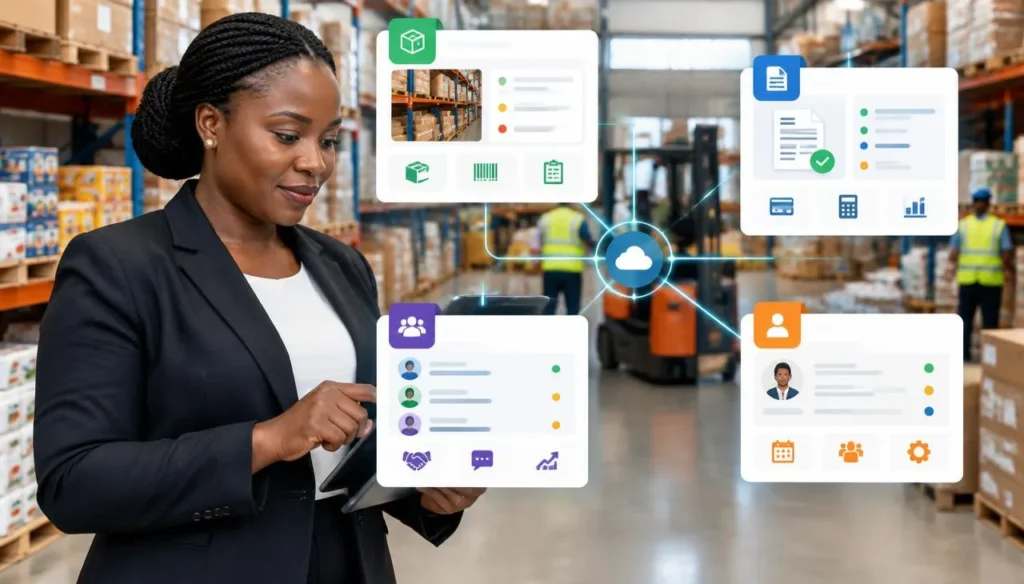
BI combines data from your systems, cleans and organises it, and presents it in dashboards and reports that show what is happening, why and what to do next.
Questions BI can answer
- Which products, branches or sales staff are most profitable?
- Where are we losing margin or stock?
- How is cash flow trending this month?
- Which customers are buying less?
- Are projects on budget and on schedule?
How to get started
- Define key questions and KPIs with management.
- Identify data sources: accounting, POS, ERP, CRM, spreadsheets and M-Pesa statements.
- Clean and connect data into a central database or data warehouse.
- Build dashboards for each role: directors, finance, sales and operations.
- Review and act on insights in regular management meetings.
Popular BI tools
- Microsoft Power BI.
- Google Looker Studio.
- Custom dashboards built into your business systems.
Data quality first
Inconsistent product names, duplicate customers and missing entries produce misleading dashboards. Standardise data entry and integrate systems so numbers flow automatically. Read API integration explained.
Our software team builds BI dashboards that connect to your existing systems.
Permalink Business Ltd. helps Kenyan businesses with websites, software, branding, networking and security. Request a free quote today.
Frequently asked questions
What is business intelligence?
BI is the process and tools that collect, organise and visualise business data so leaders can track performance and make informed decisions.
Do small businesses need BI?
Yes. Even simple dashboards on sales, margins, stock and cash flow help SMEs spot problems and opportunities early.
Which data sources can be connected?
Accounting software, POS, ERP, CRM, spreadsheets, websites, M-Pesa statements and most systems with an API or export.

A Nairobi IT company helping Kenyan businesses grow with websites, software, marketing, networking and security. Our guides are written from real client projects.