Key takeaways
- Odoo and Zoho combine CRM, sales, inventory, accounting, HR and projects in one connected system.
- Odoo suits businesses needing deep inventory, manufacturing and customisation; Zoho suits fast, affordable cloud apps for SMEs.
- Alternatives include QuickBooks, Sage, ERPNext, Microsoft Dynamics 365 and HubSpot, depending on size and budget.
- Check M-Pesa, KRA eTIMS and local payroll support before you commit.
In this guide
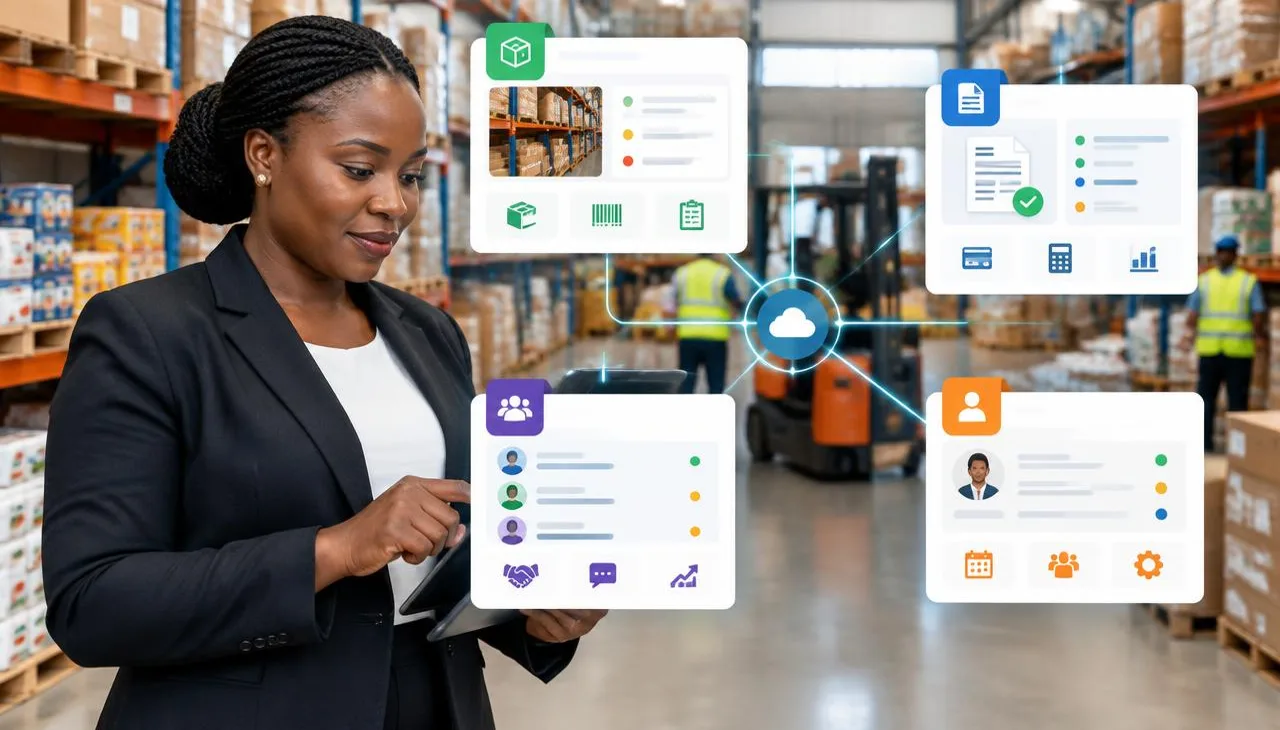
As a business grows, separate spreadsheets for sales, stock, invoices and staff become hard to manage. Business automation systems such as Odoo and Zoho bring these functions into one connected platform, so an order updates stock, creates an invoice and records payment without retyping.
This guide compares Odoo, Zoho and other popular options, and explains how to choose and implement the right one.
What a business automation system does
- CRM: leads, customers, follow-ups and sales pipelines.
- Sales and invoicing: quotations, orders, invoices and receipts.
- Inventory: stock levels, warehouses, reorder points and transfers.
- Accounting: ledgers, bank reconciliation and financial reports.
- HR and payroll: staff records, leave, attendance and payslips.
- Projects and helpdesk: tasks, timesheets and support tickets.
- Workflow automation: rules that send emails, assign tasks or update records automatically.
Odoo
Odoo is a modular ERP with apps for almost every department. It is available as Odoo Online (cloud), Odoo.sh or self-hosted, with a free Community edition and a paid Enterprise edition.
- Strengths: deep inventory, manufacturing, point of sale and e-commerce; highly customisable; one database for everything.
- Watch out for: customisation and implementation costs, and the need for a skilled partner for complex setups.
- Best for: distributors, manufacturers, retailers and growing businesses with complex processes.
Zoho
Zoho offers a family of cloud apps—Zoho CRM, Books, Inventory, People, Desk, Projects—and the bundled Zoho One suite.
- Strengths: quick to start, affordable per-user pricing, strong CRM and built-in automation through workflows, Blueprint and Zoho Flow.
- Watch out for: some deep manufacturing or very custom needs may require add-ons or development.
- Best for: service businesses, sales teams and SMEs that want cloud tools without heavy setup.
Other options worth considering
- QuickBooks Online and Sage: accounting-first systems popular with SMEs and accountants.
- ERPNext: open-source ERP with strong accounting, stock and HR modules.
- Microsoft Dynamics 365: enterprise ERP and CRM that fits organisations already on Microsoft 365.
- HubSpot: marketing and sales automation with a free CRM tier.
- Zapier and Make: connect different apps when you do not want a full ERP.
- Custom software: for unique workflows that off-the-shelf tools cannot handle. See custom software costs and benefits.
Kenya-specific requirements
- KRA eTIMS: confirm tested integration for tax invoices. Read our eTIMS integration guide.
- M-Pesa: automatic posting of paybill and till payments against invoices.
- Payroll: current PAYE, NSSF, SHIF and housing levy calculations.
- Local support: a partner who can respond quickly during month-end.
How to choose and implement
- List your key processes and pain points by department.
- Shortlist two or three systems and request demos using your real products and data.
- Compare total cost: licences, implementation, customisation, training, hosting and support.
- Clean and migrate customer, product and opening balance data carefully.
- Go live in phases, starting with the modules that bring the quickest benefit.
- Train every user and assign internal system champions.
Conclusion
Odoo, Zoho and similar systems can transform how a business runs—if they match your processes and are implemented well. Permalink Business Ltd helps Kenyan businesses choose, integrate and customise business systems, including inventory software and custom integrations.
Permalink Business Ltd. helps Kenyan businesses with websites, software, branding, networking and security. Request a free quote today.
Frequently asked questions
What is the difference between Odoo and Zoho?
Odoo is a modular ERP that can be self-hosted or cloud-based and heavily customised. Zoho is a cloud suite of connected apps such as Zoho CRM, Books, Inventory and People.
Which is better for a small business in Kenya?
It depends on your workflows. Zoho is often quicker to start; Odoo fits businesses with complex stock, manufacturing or custom processes. Test both with your real data.
Do Odoo and Zoho support KRA eTIMS?
eTIMS support usually comes through local partners, add-ons or custom integration. Confirm a working, tested integration before going live.
Can these systems accept M-Pesa payments?
Yes, through integrations or custom connectors to Safaricom Daraja or payment aggregators that post payments automatically.
How long does ERP implementation take?
A small setup can take a few weeks; larger multi-department projects take several months, including data migration and training.

A Nairobi IT company helping Kenyan businesses grow with websites, software, marketing, networking and security. Our guides are written from real client projects.